

For many chocolate lovers, the idea of managing blood sugar and diabetes while still enjoying a piece of chocolate feels like a balancing act. Some people swear chocolate spikes their glucose levels, while others hear about studies showing potential benefits from dark chocolate.
So what’s the real answer?
Is chocolate bad for diabetes? The short answer is: It depends on the type of chocolate, how much you eat, and how it fits into your overall eating plan.
Today we’ll break it down clearly — what research says, how different chocolate affects your blood sugar, which chocolates are better choices, and how you can enjoy chocolate even if you’re managing diabetes.
What People Mean When They Ask: “Is Chocolate Bad for Diabetes?”
When someone searches “Is chocolate bad for diabetes,” they are usually asking:
- Does chocolate raise blood sugar?
- Is chocolate safe to eat with diabetes?
- Can chocolate help prevent diabetes?
- Is one type of chocolate better than another?
- How much chocolate can a person with diabetes eat?
We’ll answer each of those — honestly and clearly.
According to diabetes nutrition guidelines, people with diabetes can eat chocolate in moderation, but choosing the right type and portion is essential.
How Chocolate Affects Blood Sugar
Here’s the truth:
Chocolate does contain carbohydrates and sugar, so it can raise blood sugar — but the effect varies by type and ingredient. (lark.com)
Chocolate’s impact on blood sugar depends on:
- Sugar content
- Amount eaten
- Presence of fiber, fat, and cocoa solids
- What it’s eaten with (e.g., nuts, fruit, or protein)
Many chocolates have a low to moderate glycemic index (GI), meaning the sugars are absorbed more slowly into the bloodstream — especially when chocolate has more fat or fiber. (glycemicindex.com)
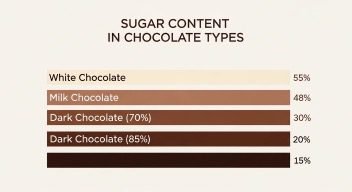
But that doesn’t mean all chocolate is the same. Milk and white chocolates often contain more added sugar and fewer cocoa solids, which can cause bigger blood sugar spikes.
Dark Chocolate vs Milk & White Chocolate: What’s the Difference?

Not all chocolate is created equal when it comes to diabetes.
Dark Chocolate
Dark chocolate generally has:
- Higher cocoa content (often 70%+)
- Less sugar than milk or white chocolate
- More fiber and flavonoids (antioxidants)
Research suggests that dark chocolate may be easier on blood sugar and might even lower the risk of type 2 diabetes over time. (BMJ)
In a large long-term study, people who ate dark chocolate at least five times per week had a significantly lower risk of developing type 2 diabetes compared with those who seldom ate chocolate.
Milk Chocolate
Milk chocolate typically has:
- Lower cocoa percentage
- Higher sugar content
- More dairy solids
These factors increase carbohydrate content and may contribute to weight gain — a key risk factor for diabetes.
White Chocolate
White chocolate contains no cocoa solids — only cocoa butter, sugar, and milk — so it offers no flavonoid benefits and has high sugar content. (Diabetes UK)
How Chocolate Can Affect Diabetes Risk
Here’s where the research gets interesting.
A large observational study found that:
🔹 Eating dark chocolate regularly was associated with up to a 21% lower risk of developing type 2 diabetescompared to eating little or no chocolate. (BMJ)
🔹 Milk chocolate did not show the same benefit and was linked to long-term weight gain, which is a risk factor for diabetes.
Keep in mind these studies are observational — they show association, not direct cause and effect. But the trend is clear: more cocoa and less sugar tends to be better. (BMJ)
What Happens to Your Blood Sugar When You Eat Chocolate?
Your blood sugar response is influenced by more than just chocolate:
1. Carbohydrate Load
Chocolate with high sugar and carbohydrates will raise blood glucose more than low-sugar dark chocolate. (Diabetes UK)
2. Fat & Fiber Slow Absorption
High cocoa and fat content can slow sugar absorption, leading to a gentler blood glucose rise. (lark.com)
3. Portion Size Matters
Small portions (about 1 ounce or ~28g) of dark chocolate are less likely to cause large spikes than bigger servings. (Dietitian Live)
Practical Tips for Enjoying Chocolate With Diabetes

If you want to include chocolate in your diet without harming blood sugar control, here are expert-recommended strategies:
Choose Dark Chocolate with High Cocoa
Aim for 70% cocoa or higher — lower sugar, more polyphenols.
Watch Portions
Keep portions small — about ¾ to 1 ounce per serving if you have diabetes. (Dietitian Live)
Pair With Protein or Fiber
Enjoy chocolate with nuts, seeds, or fruit to slow digestion and reduce glucose spikes. (Diabetes UK)
Check Labels
Read nutrition facts for sugar and carb content — not all “dark chocolates” are the same.
Is Chocolate Completely Safe for People With Diabetes?
Important nuance:
✅ Yes — chocolate canbe part of a diabetes-friendly diet if chosen wisely. (Healthline)
❌ No — certain chocolates (high-sugar candy bars, filled confections) can be harmful if eaten in excess.
Organisations like diabetes support networks confirm that people with diabetes don’t have to avoid chocolate altogether — but moderation, carbohydrate counting, and balance remain key. (diabetesfoodhub.org)
Who Should Be More Cautious?
If you have:
- Type 1 diabetes or need careful insulin dosing
- High HbA1c levels
- Frequent blood sugar fluctuations
Speak with your healthcare provider about including chocolate safely.
Also be aware that sugar-free chocolates may use sugar alcohols that can cause digestive discomfort in some individuals.
Quick Comparison: Chocolate Types and Diabetes Impact
| Chocolate Type | Sugar Content | Cocoa | Diabetes Impact |
| Dark Chocolate (70%+) | Lower | High | May help insulin sensitivity, lower risk |
| Milk Chocolate | Higher | Low–Moderate | Likely raises blood sugar more |
| White Chocolate | High | None | Least beneficial |
This table shows general trends — actual products vary.
People Also Ask
Can people with diabetes eat chocolate?
Yes — in moderation and with attention to sugar and portion size. (Healthline)
Does chocolate raise blood sugar?
Chocolate can raise blood sugar, but dark chocolate has a lower GI and slower absorption. (lark.com)
Is dark chocolate good for diabetes?
Some research suggests dark chocolate may support insulin sensitivity and lower diabetes risk when consumed moderately.
Should people with diabetes avoid milk chocolate?
Milk chocolate has more sugar and carbohydrates, which may lead to greater blood glucose increases.
Is chocolate a cause of diabetes?
No — diabetes risk involves multiple factors like diet, weight, genetics and lifestyle; chocolate alone does not cause diabetes. (Harvard Chan School)
Real Talk: Moderation is the Sweet Spot
So, is chocolate bad for diabetes?
Not inherently.
Dark chocolate, with high cocoa and lower sugar, can be part of a balanced eating plan — and research suggests potential benefits for insulin sensitivity and diabetes risk when enjoyed responsibly. (Dietitian Live)
Milk and white chocolates, with higher sugar content, have less benefit and can contribute to weight gain if eaten in excess — which is a major risk factor for type 2 diabetes.
At the end of the day, chocolate isn’t a forbidden food — it’s a treat you can enjoy thoughtfully, especially when you choose quality and portion control.
If you had to pick a type of chocolate to enjoy — dark, milk, or white — which one fits your routine best and how would you enjoy it? Let us know in the comments!
Our Authority Sources
Harvard T.H. Chan School of Public Health – Dark chocolate and decreased diabetes risk research.
Diabetes Food Hub – Guidelines on chocolate for people with diabetes.
American Diabetes Association – Practical dietary guidance for people with diabetes.
Healthline – Dark Chocolate Benefits – Effects on blood sugar and diabetes.