
What Is Couverture Chocolate
Chocolate lovers often hear professionals mention “couverture chocolate” with a certain tone of respect. It sounds luxurious. Technical. Almost secret.
So naturally, the question comes up: What is couverture chocolate, and why do chefs love it so much?
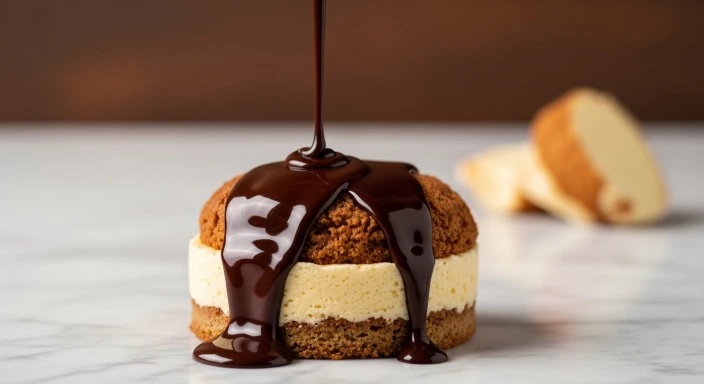
If you’ve ever admired a glossy chocolate glaze on a cake, snapped a perfectly shiny chocolate bar in half, or bitten into a smooth truffle with that satisfying crack — chances are you were tasting couverture chocolate.
But couverture isn’t just fancy chocolate. It has specific characteristics that make it different from regular baking chocolate. Understanding those differences helps you decide whether it’s worth using at home — and when it truly makes a difference.
Let’s break it down in a simple, chocolate-lover way.
What Is Couverture Chocolate?
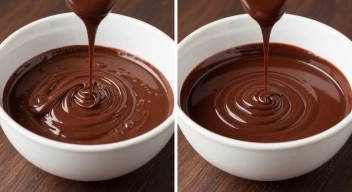
Couverture chocolate is high-quality chocolate that contains a higher percentage of cocoa butter than regular chocolate, making it smoother, more fluid when melted, and ideal for tempering, coating, and enrobing.
The word couverture comes from French, meaning “covering.” That’s your first clue. It’s specifically designed for coating and finishing desserts.
Unlike standard baking chocolate, couverture typically contains:
- Higher cocoa butter content (minimum 31% in many standards)
- Fine particle size for smoother texture
- Balanced cocoa solids and sugar
- Excellent melting and tempering properties
Because of this composition, it:
- Melts more evenly
- Spreads more smoothly
- Sets with a glossy finish
- Produces that satisfying “snap” when broken
If you’ve read our guide on Dark vs Milk Chocolate: The Surprising Health Differences You Need to Know, you already understand cocoa percentages. Couverture builds on that idea — but with cocoa butter as the star.
Why Do Chefs Love Couverture Chocolate?
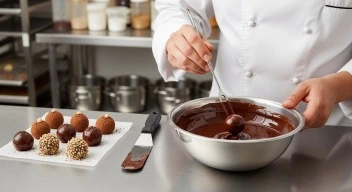
Chefs love couverture chocolate for one simple reason:
Control.
In professional kitchens, consistency and visual appeal matter just as much as flavor. Couverture chocolate allows chefs to:
- Achieve mirror-like shine
- Create thin, even coatings
- Produce clean snaps in molded chocolate
- Maintain fluidity for dipping and glazing
When making chocolate truffles (like in our How to Make Chocolate Truffles at Home guide), that smooth outer shell comes from properly tempered chocolate — often couverture.
Couverture isn’t just better. It’s more precise.
What Makes Couverture Chocolate Different from Regular Chocolate?
Let’s compare clearly.
Cocoa Butter Content
Regular chocolate:
- Lower cocoa butter
- Thicker when melted
- Less fluid
Couverture chocolate:
- Higher cocoa butter
- Flows more easily
- Creates thinner coatings
Cocoa butter is what gives chocolate that luxurious melt-in-your-mouth feel. According to the International Cocoa Organization (ICCO), cocoa butter plays a key role in texture and tempering performance.
Tempering Performance
Tempering is the controlled heating and cooling process that stabilizes cocoa butter crystals. Proper tempering gives chocolate:
- Gloss
- Snap
- Resistance to melting too quickly
Couverture chocolate tempers beautifully because of its cocoa butter structure.
If you’ve ever struggled with chocolate that turns dull or streaky, it likely wasn’t ideal for tempering.
Is Couverture Chocolate Healthier?
This is where clarity matters.
Couverture chocolate is not automatically healthier. Its cocoa butter content is higher, which increases fat content — though cocoa butter itself contains no sugar.
Health depends on:
- Cocoa percentage
- Sugar content
- Overall portion size
The Harvard T.H. Chan School of Public Health explains that flavonoids in cocoa may support heart health, but benefits depend on cocoa concentration, not simply the label.
Couverture can be dark, milk, or even white. Its health profile depends on formulation — not the name alone.
When Should You Use Couverture Chocolate?
Use couverture when:
- Dipping strawberries
- Making chocolate shells
- Coating truffles
- Glazing cakes
- Creating chocolate decorations
- Making molded chocolate bars
If you’re baking brownies or muffins, standard baking chocolate usually works perfectly.
But for presentation-focused desserts like our How to Make Chocolate Crepe Cake, couverture gives that professional finish.
Can You Use Couverture Chocolate at Home?
Absolutely — but with awareness.
Pros:
- Superior texture
- Professional finish
- Better tempering
- Thinner coating
Cons:
- More expensive
- Requires proper tempering
- Slight learning curve
If you’re just starting, you don’t need couverture. But if you love chocolate work, it’s worth experimenting with.
How to Temper Couverture Chocolate (Simple Overview)
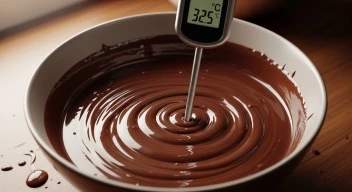
Tempering sounds intimidating, but the idea is straightforward.
- Melt chocolate to about 45–50°C (113–122°F)
- Cool it down to around 27°C (80°F)
- Reheat slightly to working temperature (31–32°C for dark)
This process stabilizes cocoa butter crystals.
Tempering isn’t required for baking — only for coating and molding.
Is Couverture Chocolate the Same as Baking Chocolate?
No.
Baking chocolate:
- Designed for mixing into batters
- Often less cocoa butter
- Not optimized for shine or coating
Couverture chocolate:
- Designed for coating
- Higher cocoa butter
- Better for tempering
They overlap — but they aren’t identical.
Does Couverture Chocolate Taste Better?
Often, yes — but not always.
Taste depends on:
- Brand
- Cocoa origin
- Roast level
- Sugar balance
Couverture chocolate tends to:
- Feel smoother
- Melt more evenly
- Have refined texture
But flavor still varies widely.
Our article Regular Chocolate vs Baking Chocolate – All You Need to Know explains how formulation changes flavor perception.
Is Couverture Chocolate Worth the Price?
That depends on your goal.
For everyday baking? Probably not necessary.
For:
- Gift chocolates
- Holiday desserts
- Special occasions
- Decorative work
Yes — it can elevate results.
Professionals value consistency. Home bakers value convenience. Couverture sits at the intersection of both — if you enjoy chocolate craft.
Common Questions About What Is Couverture Chocolate
What is couverture chocolate used for?
Coating, dipping, enrobing, molding, and decorative chocolate work.
What percentage cocoa is couverture chocolate?
It varies, but it contains higher cocoa butter content — often 31% or more.
Is couverture chocolate better than regular chocolate?
For coating and tempering, yes. For baking inside recipes, not necessarily.
Can beginners use couverture chocolate?
Yes — especially for dipping. Tempering takes practice.
Is couverture chocolate healthier?
Not inherently. It depends on cocoa percentage and sugar content.
Why Do Professional Kitchens Choose Couverture?
Because presentation matters.
In pastry competitions and high-end restaurants, appearance influences perception. Couverture chocolate creates:
- Glossy finishes
- Clean edges
- Thin shells
- Elegant textures
Chocolate work is part science, part artistry — and couverture provides control over both.
Final Thoughts: What Is Couverture Chocolate and Why Do Chefs Love It?
So, what is couverture chocolate?
It’s chocolate crafted specifically for coating and professional presentation, containing higher cocoa butter for superior melting, shine, and snap.
Chefs love it because it gives them control — over texture, appearance, and structure. It turns simple desserts into polished creations.
But at home, it’s optional. Not mandatory.
If you enjoy experimenting and love that glossy finish, it’s worth trying. If you bake casually, standard chocolate works beautifully.
Now I’m curious — have you ever worked with couverture chocolate, or are you thinking about trying it for the first time?
Our Authority Sources
International Cocoa Organization (ICCO) – Provides standards and insights into cocoa composition and processing practices.
Harvard T.H. Chan School of Public Health – Research on cocoa flavonoids and health context.
FDA – U.S. Food & Drug Administration – Chocolate standards and labeling requirements.