

If you’ve ever stood in the baking aisle holding white chocolate in one hand and milk chocolate in the other, you’ve probably asked the same question many home bakers do:
Which one is actually better for baking?
The honest answer is: it depends on what you’re baking, how you want it to taste, and how you want it to behave in the oven.
This guide breaks down white chocolate vs milk chocolate for baking in a clear, practical way. No hype. No rules that don’t hold up in a real kitchen. Just honest explanations, examples, and tips you can use right away.
By the end, you’ll know exactly when to use each one—and why.
Understanding the Core Difference (Before We Compare)
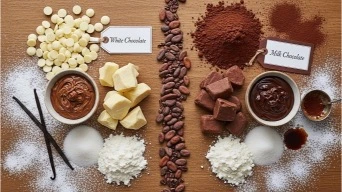
Before choosing sides, it helps to understand what white chocolate and milk chocolate actually are.
Both come from the cacao bean.
But they’re built very differently.
White Chocolate
- Made from cocoa butter
- Contains milk solids and sugar
- No cocoa solids
Milk Chocolate
- Contains cocoa butter + cocoa solids
- Includes milk and sugar
- Has real chocolate flavor and color
If you want a deeper breakdown of white chocolate itself, What Is White Chocolate and How Is It Made is a helpful foundation article.
How Baking Changes Chocolate Behavior
Chocolate doesn’t just add flavor.
It affects texture, moisture, sweetness, and structure.
When heat is involved, fat content matters. Sugar matters. Cocoa solids matter.
That’s why choosing the right chocolate can be the difference between:
- A soft cookie and a dry one
- A smooth filling and a greasy mess
- Balanced sweetness and something overpowering
White Chocolate for Baking: Strengths and Weaknesses
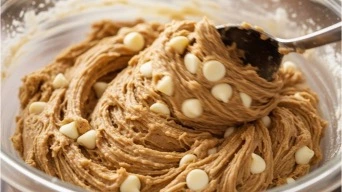
Why Bakers Love White Chocolate
White chocolate brings creaminess and richness without bitterness.
It’s especially good when:
- You want sweetness without chocolate intensity
- You’re pairing with tart or bitter ingredients
- You want visual contrast in baked goods
Because it contains only cocoa butter (no cocoa solids), white chocolate melts smoothly and blends easily into doughs and batters.
That’s why it works so well in recipes like cookies, blondies, and mousse-based desserts. Our article White Chocolate Recipes: How to Make the Best Home Cookies shows how to balance its sweetness properly.
The Downsides of White Chocolate
White chocolate also has limitations.
- It can burn easily
- It can taste overly sweet if not balanced
- It doesn’t provide deep “chocolate” flavor
- Cheap versions can be waxy
Because of this, white chocolate performs best when paired thoughtfully—not used as a direct substitute for darker chocolates.
Milk Chocolate for Baking: Strengths and Weaknesses
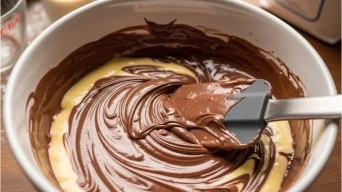
Why Milk Chocolate Is So Popular
Milk chocolate is often the most familiar option.
It offers:
- Balanced sweetness
- Mild cocoa flavor
- Comforting, classic taste
- Good performance in most baked goods
Milk chocolate contains cocoa solids, which give it flavor depth that white chocolate lacks.
This makes it ideal for:
- Cookies
- Brownies
- Cakes
- Frostings
If you enjoy classic chocolate desserts, milk chocolate often feels “right” without much adjustment.
Where Milk Chocolate Can Fall Short
Milk chocolate isn’t perfect either.
- It melts faster than dark chocolate
- It can lose flavor in high-heat baking
- It may taste bland next to strong flavors
- It can become grainy if overheated
This is why temperature control matters. How to Melt Chocolate Chips Easily explains how to avoid common melting problems with milk and white chocolate alike.
White Chocolate vs Milk Chocolate in Cookies
Cookies are where this comparison really matters.
White Chocolate Cookies
- Softer texture
- Sweeter profile
- Excellent with add-ins like:
- Cranberries
- Macadamia nuts
- Citrus zest
White chocolate shines when it’s not competing with cocoa bitterness.
Milk Chocolate Cookies
- More familiar chocolate taste
- Balanced sweetness
- Pairs well with:
- Vanilla dough
- Brown sugar
- Oats
Milk chocolate cookies tend to feel more “classic,” while white chocolate cookies feel more playful or special.
White Chocolate vs Milk Chocolate in Cakes
Cakes bring different challenges.
White Chocolate in Cakes
Best used when:
- Melted into batter
- Used in fillings or frostings
- Paired with fruit or spice
It adds moisture and richness, but not chocolate depth.
Milk Chocolate in Cakes
Better for:
- Chocolate-flavored batters
- Ganache layers
- Glazes and frostings
Milk chocolate holds up better in baked cake layers than white chocolate.
White Chocolate vs Milk Chocolate for Fillings and Frostings
This is where white chocolate often wins.
White Chocolate Fillings
- Smooth
- Creamy
- Mild
- Easy to flavor with coffee, citrus, or spice
It’s ideal for mousse, buttercream, and sandwich-style desserts. Recipes like How to Make Spiced White Chocolate Mocha Whoopie Pies rely on white chocolate for this exact reason.
Milk Chocolate Fillings
- Richer chocolate flavor
- Slightly heavier mouthfeel
- Better for ganache or chocolate-forward frostings
Both work—but they create very different results.
How Cocoa Butter Changes Baking Results
White chocolate contains more cocoa butter relative to cocoa solids.
Cocoa butter:
- Melts at body temperature
- Adds smoothness
- Affects how baked goods set and soften
Understanding cocoa butter helps explain why white chocolate behaves so differently in recipes. What Is Cocoa Butter? Benefits & Uses for Better Health breaks this down clearly.
Sweetness: The Real Baking Challenge
The biggest practical difference between white chocolate and milk chocolate is sweetness.
White chocolate:
- Very sweet
- No bitterness to balance sugar
Milk chocolate:
- Sweet, but balanced by cocoa solids
That’s why white chocolate often needs:
- Salt
- Acid (berries, citrus)
- Bitterness (coffee, spices)
Milk chocolate is more forgiving.
Nutrition Considerations (Without the Hype)
Neither white nor milk chocolate should be considered a health food.
However, there are differences.
Milk chocolate contains cocoa solids, which provide:
- Small amounts of antioxidants
- Trace minerals
White chocolate does not.
According to Harvard T.H. Chan School of Public Health, most of chocolate’s potential health benefits come from cocoa solids—not cocoa butter.
That doesn’t make white chocolate “bad.”
It just means it’s best enjoyed for pleasure, not nutrition.
For a realistic perspective, Milk Chocolate vs Dark Chocolate Nutrition explains where milk chocolate fits nutritionally.
Does Price Matter When Baking?
Sometimes.
Higher-quality chocolate usually means:
- More cocoa butter
- Better texture
- Cleaner flavor
But price alone isn’t a guarantee.
If you’re curious whether expensive chocolate is worth it, our article Are Expensive Chocolates Really Better? What the Experts Say explores when quality truly matters.
White Chocolate vs Milk Chocolate: Which Is Better for Baking?
Here’s the simple answer most bakers need:
Choose White Chocolate If:
- You want creamy sweetness
- You’re baking cookies, fillings, or mousse
- You’re pairing with tart or bitter flavors
- You want visual contrast
Choose Milk Chocolate If:
- You want classic chocolate flavor
- You’re baking cakes or brownies
- You want balance without extra adjustments
- You’re making familiar, crowd-pleasing desserts
Neither is “better” in every situation.
They just do different jobs.
People Also Ask: Common Questions
Can I substitute white chocolate for milk chocolate?
Not directly. Expect sweetness changes and texture differences.
Does white chocolate melt better than milk chocolate?
It melts smoothly, but burns faster. Gentle heat is essential.
Which one is better for beginners?
Milk chocolate is more forgiving for first-time bakers.
Can I mix white and milk chocolate?
Yes. Blending them can create balanced sweetness and flavor.
Short FAQ: White Chocolate vs Milk Chocolate
Which is sweeter?
White chocolate.
Which has more chocolate flavor?
Milk chocolate.
Which is better for frosting?
White chocolate for mildness, milk chocolate for richness.
Which is better for cookies?
Both—depending on the recipe.
Final Thoughts
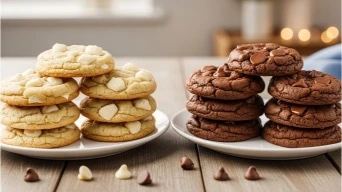
So, white chocolate vs milk chocolate— which is better for baking?
The best choice depends on:
- Flavor goals
- Texture needs
- Recipe structure
- Personal taste
White chocolate brings creaminess and sweetness.
Milk chocolate brings familiarity and balance.
When you understand what each one does, baking becomes less about guessing—and more about intention.
And if you enjoy chocolate explained in a clear, realistic way, you’ll find many more baking guides and ingredient deep-dives on ChocoTalks.com, where chocolate is always treated with care and curiosity.