
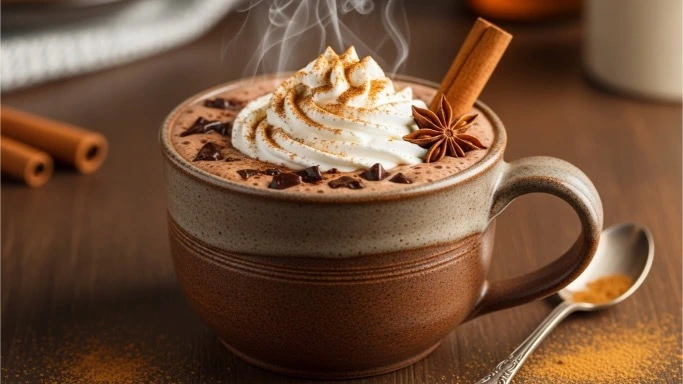
Mexican hot chocolate is not just hot chocolate with cinnamon. It’s deeper, warmer, and more aromatic. It smells like comfort before you even take a sip. One cup can feel cozy, nostalgic, and quietly exciting all at once.
If you love chocolate and you’ve only had classic cocoa, this is a beautiful next step.
In this guide, you’ll learn how to make Mexican hot chocolate the easy way, starting with a detailed, fun-to-read recipe right after this introduction, followed by simple variations, common mistakes, and answers to the questions people always ask. No shortcuts that ruin flavor. No complicated techniques that take the joy out of it.
This is about real chocolate, real spices, and real pleasure.
Easy Mexican Hot Chocolate Recipe (Step-by-Step)
This recipe stays true to the spirit of traditional Mexican hot chocolate while keeping it practical for a home kitchen. It’s rich but not heavy, spiced but not overwhelming, and easy enough for a weeknight.
What Makes This Hot Chocolate “Mexican”
- Real chocolate (not just cocoa powder)
- Cinnamon as a core flavor
- Optional chili for gentle heat
- A thicker, more comforting texture
Ingredients (Serves 2)
- 2 cups milk (whole milk is best, but any milk works)
- 2 oz dark chocolate, chopped (70% cocoa is ideal)
- 1 tablespoon cocoa powder (unsweetened)
- 1–2 tablespoons sugar (adjust to taste)
- 1 cinnamon stick (or ½ teaspoon ground cinnamon)
- Pinch of chili powder or cayenne (optional)
- Pinch of salt
- ½ teaspoon vanilla extract
If you’re curious about why dark chocolate works so well here, Milk Chocolate vs Dark Chocolate Nutrition explains how cocoa content affects both flavor and balance.
Step 1: Warm the Milk Gently
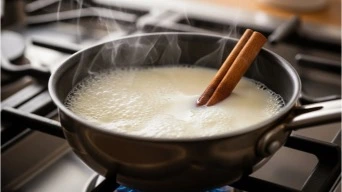
Pour the milk into a saucepan and set it over medium-low heat.
- Add the cinnamon stick now
- Stir occasionally
- Do not let the milk boil
Slow heating allows the cinnamon to infuse the milk instead of sitting on top as a harsh spice.
Step 2: Add Cocoa Powder and Sugar
Whisk the cocoa powder, sugar, and salt directly into the warm milk.
This step builds the chocolate base before the real chocolate goes in.
If you’ve ever struggled with clumpy cocoa, our article How to Melt Chocolate Chips Easily also explains why gradual heat and whisking make a difference here.
Step 3: Melt in the Chocolate
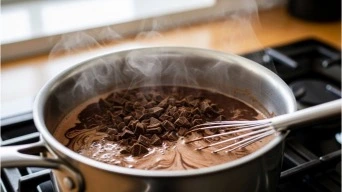
Add the chopped dark chocolate to the saucepan.
Lower the heat slightly and stir slowly until:
- The chocolate is fully melted
- The drink looks glossy and smooth
This is where Mexican hot chocolate gets its richness. Real chocolate brings depth that cocoa powder alone can’t.
Step 4: Add Spice and Vanilla
Now add:
- A small pinch of chili powder (optional)
- Vanilla extract
Start small with chili. You’re not aiming for “spicy,” just warmth in the background.
Taste and adjust:
- More sugar if needed
- More cinnamon if you like it bold
Step 5: Finish and Serve
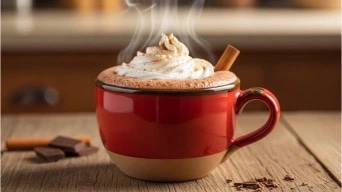
Remove the cinnamon stick.
Pour into mugs and serve immediately.
For a traditional touch, whisking or frothing slightly adds a soft foam on top, similar to the classic molinillo method used in Mexico.
What Makes Mexican Hot Chocolate Different From Regular Hot Chocolate?
This question comes up a lot—and the difference matters.
Mexican hot chocolate:
- Uses real chocolate, not just cocoa mix
- Relies on spices for warmth, not sweetness
- Has a deeper, less sugary flavor
If you’ve ever made classic cocoa with powder alone, you’ll notice this version feels more layered and satisfying.
For a side-by-side comparison, How to Make Hot Chocolate With Cocoa Powder explains how texture and flavor change depending on the base.
Choosing the Best Chocolate for Mexican Hot Chocolate
Chocolate choice can make or break this recipe.
Best Options
- Dark chocolate (70–85%)
- Chocolate with cocoa butter listed clearly
What to Avoid
- Chocolate chips (they’re designed to resist melting)
- Overly sweet chocolate bars
Easy Variations You Can Try
Once you’ve mastered the base recipe, small tweaks can personalize it.
Traditional Mexican Style
- Use Mexican chocolate tablets
- Skip vanilla
- Keep sweetness low
Spicy Chocolate Lovers
- Add a tiny pinch of cayenne
- Try ancho chili powder
Creamy Version
- Replace ½ cup milk with cream
- Reduce sugar slightly
Dairy-Free
- Use oat milk or almond milk
- Choose dairy-free dark chocolate
Common Mistakes to Avoid
Boiling the Milk
This dulls chocolate flavor and can cause graininess.
Adding Too Much Chili
Mexican hot chocolate should be warming, not hot sauce.
Using Low-Quality Chocolate
Sugar-heavy chocolate masks the spices instead of blending with them.
For a realistic take on moderation and balance, Reasons Why Chocolate Is Bad for You offers helpful context without guilt.
Is Mexican Hot Chocolate Healthy?
It’s best thought of as a comfort drink, not a health beverage.
That said:
- Dark chocolate contains cocoa compounds
- Cinnamon adds aroma without sugar
- You control sweetness at home
According to Harvard T.H. Chan School of Public Health, cocoa-based drinks can fit into a balanced diet when sugar is kept reasonable.
People Also Ask About Mexican Hot Chocolate
Is Mexican hot chocolate spicy?
Not usually. It’s gently warm, not hot.
Can I make it ahead of time?
Yes. Reheat gently and stir well.
Is it thicker than regular hot chocolate?
Yes, especially when made with real chocolate.
Can kids drink it?
Yes—skip the chili.
Can I use cocoa powder only?
You can, but flavor will be less rich.
What milk works best?
Whole milk gives the creamiest result.
Is Mexican chocolate required?
No. Good dark chocolate works well.
Can I sweeten with honey or maple syrup?
Yes, but add slowly and taste.
The Cultural Roots of Mexican Hot Chocolate
Chocolate has deep roots in Mesoamerican cultures, where cacao was consumed as a spiced drink long before it became a sweet dessert.
According to International Cocoa Organization, traditional cacao drinks emphasized bitterness, spice, and ritual rather than sugar.
Modern Mexican hot chocolate is a gentler, more accessible version of that tradition.
Final Thoughts: A Cup Worth Slowing Down For
Learning how to make Mexican hot chocolate isn’t about mastering a technique. It’s about understanding chocolate in a warmer, more expressive way.
This is the kind of drink you make:
- On cold evenings
- When you want comfort without heaviness
- When chocolate deserves center stage
And if you enjoy chocolate explained with clarity, warmth, and respect for tradition, you’ll always find more thoughtful guides and recipes on ChocoTalks.com, where chocolate is never rushed and never overcomplicated.
Our Authority Sources
- International Cocoa Organization
Cultural history of cocoa and traditional preparation methods. - Harvard T.H. Chan School of Public Health
Research-based context on cocoa compounds and moderation. - Cleveland Clinic
Balanced view on chocolate, caffeine, and enjoyment. - History. – Historical references to cacao use in ancient cultures.