
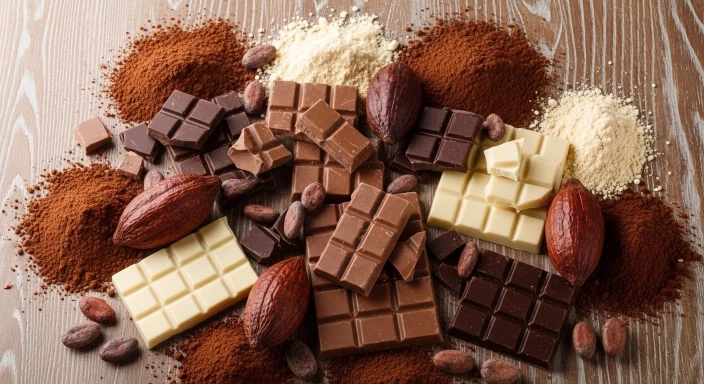
Ultimate Chocolate Guide
Chocolate is one of those rare foods that feels both indulgent and deeply comforting. It can be silky and luxurious, bold and bitter, sweet and nostalgic. It belongs in elegant desserts, cozy winter drinks, and even simple afternoon snacks.
But for something so familiar, chocolate is surprisingly complex.
If you’ve ever wondered:
- What’s the real difference between dark, milk, and white chocolate?
- Is chocolate actually healthy?
- Why does chocolate sometimes turn white?
- How should you store it properly?
- Which type works best for baking?
This ultimate chocolate guide brings everything together in one place — clearly, honestly, and without exaggeration.
Let’s unwrap it piece by piece.
What Is Chocolate Made Of?
At its heart, chocolate begins with the cacao bean. These beans grow inside cacao pods on cacao trees in tropical regions. After harvesting, the beans are fermented, dried, roasted, and ground into a thick paste called chocolate liquor (which contains no alcohol).
From there, the chocolate-making process separates and blends components:
- Cocoa solids (for flavor)
- Cocoa butter (for smoothness and melt)
- Sugar
- Milk solids (in milk chocolate)
- Optional ingredients like vanilla or emulsifiers
If you’d like a deeper look at how cocoa becomes the powder you bake with, you might enjoy our full breakdown of how cocoa powder is made.
Understanding this foundation makes everything else easier.
The Main Types of Chocolate (And When to Use Them)
Dark Chocolate
Dark chocolate contains cocoa solids, cocoa butter, and sugar — but no milk solids.
The percentage on the label (70%, 85%, etc.) tells you how much of the bar comes from cocoa solids and cocoa butter combined. The higher the percentage, the more intense and less sweet it will taste.
Best for:
- Rich desserts
- Ganache
- Truffles
- Pairing with wine or coffee
- People who enjoy bold flavor
Dark chocolate is often praised for its potential health benefits, which we’ll discuss shortly.
Milk Chocolate
Milk chocolate adds milk solids to the cocoa mixture, making it sweeter, creamier, and softer in flavor.
It melts smoothly and feels comforting — the kind many of us grew up eating.
Best for:
- Cookies
- Candy bars
- Frostings
- Kid-friendly desserts
If you’re curious how it compares nutritionally, here’s our detailed comparison of milk chocolate vs dark chocolate nutrition.
White Chocolate
Technically, white chocolate contains no cocoa solids — only cocoa butter, sugar, and milk solids.
That’s why it tastes buttery and sweet rather than chocolatey and intense.
If you’ve ever wondered what qualifies as real white chocolate, read our guide on what white chocolate is and how it’s made
Best for:
- Decorative drizzles
- Holiday desserts
- Cheesecakes
- Pairing with tart fruits like raspberry
Baking Chocolate vs Eating Chocolate
Not all chocolate is meant for snacking straight from the wrapper.
Baking chocolate often has little or no sugar added. It’s designed to be incorporated into recipes where sweetness is adjusted separately.
If you’re unsure which to choose, our comparison of regular chocolate vs baking chocolate can help you avoid common baking mistakes.
Is Chocolate Healthy? What the Science Really Says
Chocolate has been studied extensively, especially dark chocolate rich in cocoa solids.
Potential Benefits of Dark Chocolate
According to research summarized by institutions like the Harvard T.H. Chan School of Public Health and the Cleveland Clinic:
- Cocoa contains flavonoids (plant compounds linked to heart health)
- Moderate dark chocolate intake may support circulation
- It may contribute small amounts of minerals like iron and magnesium
However, context matters.
Chocolate is still calorie-dense and often contains added sugar. The potential benefits apply mainly to high-cocoa dark chocolate, not heavily processed candy bars.
If you want a deeper dive, we explore the topic in is dark chocolate really healthy?
The key word is moderation.
What About Sugar Content?
One of the most common concerns is sugar.
Milk chocolate usually contains significantly more sugar than dark chocolate. Higher cocoa percentages typically mean less sugar — but also more bitterness.
We break it down in detail here
Understanding labels helps you choose wisely rather than avoiding chocolate altogether.
Does Chocolate Contain Caffeine?
Yes — but less than coffee.
Dark chocolate contains small amounts of caffeine and theobromine, both mild stimulants.
If you’re sensitive to caffeine, especially in the evening, this matters. Here’s our complete guide.

How to Store Chocolate Properly
Chocolate is sensitive. Heat, moisture, and strong odors can ruin it.
Ideal Storage Conditions
- Temperature: 60–70°F (15–21°C)
- Low humidity
- Away from sunlight
- Sealed container
Refrigeration is not ideal unless your home is very warm — and if you do refrigerate it, wrap it tightly to prevent condensation.
If you’ve ever seen white streaks on chocolate, that’s likely fat bloom or sugar bloom. It looks strange but is usually safe to eat.
We explain this fully in how to store chocolate to keep it fresh.
Proper storage protects flavor and texture.

Common Chocolate Mistakes to Avoid
Even experienced bakers make these:
1. Overheating When Melting
Chocolate burns easily. Use a double boiler or microwave in short intervals, stirring frequently.
2. Adding Water to Melted Chocolate
Even a few drops can cause it to seize and turn grainy.
3. Using the Wrong Type in Recipes
Swapping baking chocolate for sweet chocolate without adjusting sugar changes everything.
4. Storing It Near Spices
Chocolate absorbs odors easily.
Small details make a big difference.
How to Use Chocolate in Everyday Cooking
Chocolate isn’t just for cakes.
Baking
Cookies, brownies, muffins, layered cakes.
If you want a crowd-pleasing example, try the best chocolate chip cookies.

Drinks
Hot chocolate, mochas, chocolate milk.
For a cozy version, see how to make hot chocolate with cocoa powder.
Savory Applications
In some cuisines, small amounts of cocoa deepen sauces and chili.
Gifting & Seasonal Treats
Chocolate shines during holidays. For festive inspiration, explore the best Christmas chocolate recipes.
How to Choose Quality Chocolate
When shopping, look at:
- Cocoa percentage
- Short ingredient list
- Cocoa butter listed (not vegetable oil substitutes)
- Ethical sourcing certifications (like Fair Trade or Rainforest Alliance)
Reputable guidance on label reading can also be found through organizations like:
Higher price doesn’t always guarantee better flavor — but transparency usually signals better quality.
People Also Ask About Chocolate
Why does chocolate melt in your hands?
Cocoa butter melts slightly below body temperature, which creates that luxurious melt-in-your-mouth experience.
Why does chocolate sometimes turn white?
It’s usually fat bloom or sugar bloom, caused by temperature fluctuations.
Is chocolate gluten-free?
Pure chocolate is generally gluten-free, but cross-contamination or added ingredients may change that. Always check labels.
Can chocolate expire?
Yes. It doesn’t spoil quickly, but flavor and texture decline over time — especially if stored poorly.
FAQ
How much chocolate is safe to eat daily?
There’s no universal rule. Small portions of high-quality dark chocolate (around 1 ounce) are generally considered reasonable in a balanced diet.
Is 85% dark chocolate better than 70%?
It contains more cocoa and usually less sugar, but taste preference matters. If it’s too bitter, you’re less likely to enjoy it mindfully.
Should I refrigerate chocolate in summer?
Only if necessary — and always wrap it tightly to avoid moisture.
What’s the best chocolate for baking cookies?
Semi-sweet chocolate chips or chopped dark chocolate (60–70%) work beautifully.
Conclusion: The Joy of Understanding Chocolate
This ultimate chocolate guide isn’t about telling you what to eat or what to avoid. It’s about understanding chocolate — its types, its benefits, its limits, and how to enjoy it fully.
Chocolate can be bold or delicate. It can be part of a balanced lifestyle or a celebratory treat. It can be stored carefully, melted gently, and shared generously.
When you understand how chocolate works — from cocoa bean to baking tray — you enjoy it differently. More intentionally. More confidently.
So now that you know the types, the health facts, the storage secrets, and the best uses…
What kind of chocolate are you reaching for next?
Our Authority Sources
To ensure this guide reflects current understanding (2026), we referenced information from:
- Harvard T.H. Chan School of Public Health – The Nutrition Source
Provides research-backed nutritional analysis of cocoa and flavonoids. - Cleveland Clinic – Health Essentials
Offers medically reviewed articles on chocolate and heart health. - U.S. Food & Drug Administration (FDA)
Defines labeling standards and ingredient regulations. - Academy of Nutrition and Dietetics
Offers guidance on balanced dietary patterns. - National Confectioners Association
Provides industry information on chocolate production and standards.