

Can chocolate help your skin glow
We’ve all heard that chocolate can cause breakouts — but what if that’s not the whole story? Recent research is flipping this old myth on its head. While sugary candy bars might not do your skin any favors, pure dark chocolate may actually help your skin look healthier, smoother, and more radiant.
So, can chocolate really make your skin glow? The short answer is yes — but only the right kind, and in moderation. The longer answer (and the science behind it) is what we’ll explore today.
This post breaks down the research on how chocolate affects your skin, from hydration to UV protection, and gives you practical tips on how to enjoy chocolate as part of your glow-up routine.
If you love learning how chocolate benefits your health, don’t miss Is Dark Chocolate Really Healthy?.
Why People Think Chocolate Causes Breakouts
Let’s start with the myth that chocolate ruins your skin. For decades, chocolate has been blamed for acne — but most of that reputation came from high-sugar milk chocolate and candy, not real cocoa.
The culprit isn’t cocoa itself. It’s the excess sugar and dairy that can trigger inflammation, spike insulin levels, and clog pores. When you eat ultra-processed sweets, your skin can become oilier and more prone to breakouts.
But pure dark chocolate, which is rich in antioxidants and low in sugar, tells a completely different story.
A study from The Journal of Clinical and Aesthetic Dermatology found that high-glycemic diets contribute to acne, while antioxidant-rich foods like cocoa may reduce inflammation.
The Real Skin Superpower in Chocolate: Flavonoids
Flavonoids are plant-based antioxidants found in cacao beans, and they’re the reason dark chocolate has become a favorite among wellness experts.
These compounds neutralize free radicals, which are unstable molecules that damage skin cells and accelerate aging. By reducing oxidative stress, chocolate flavonoids can help preserve collagen, improve elasticity, and promote a smoother complexion.
In other words: while sugar-heavy treats might dull your glow, cocoa itself helps your skin fight back against damage from sun exposure and pollution.
American Botanical Council showed that Consumption of Chocolate High in Flavanols Increases Skin Elasticity
You might also enjoy our science-focused post Health Benefits of Cocoa Powder: Antioxidants, Energy, and More.
Chocolate and Hydrated, Supple Skin
One of chocolate’s most underrated benefits is how it helps your skin retain moisture. Studies show that consuming high-flavonoid dark chocolate for 12 weeks increases skin hydration by enhancing microcirculation — meaning your skin cells receive more oxygen and nutrients.
Think of it as beauty that starts from within. Instead of slathering on another moisturizer, you’re nourishing your skin at the cellular level.
Research published in Skin Pharmacology and Physiology found that women who consumed cocoa flavanols daily saw increased hydration and reduced roughness.
Curious about combining chocolate with other nutrient-rich foods? Check out Chocolate Strawberry Cake: The Perfect Blend of Sweet and Decadent.
How Chocolate Helps Fight UV Damage
Another reason chocolate is your skin’s friend: UV protection.
The antioxidants in dark chocolate can increase your skin’s resistance to sun damage. They work by protecting skin cells from oxidative stress, improving blood flow, and strengthening the skin barrier.
In one study, participants who consumed high-flavonoid cocoa daily showed significantly less UV-induced redness than those who didn’t. This doesn’t mean you can skip sunscreen — but it does mean your chocolate habit might be giving you some backup defense.
According to a study in The Journal of Photochemistry and Photobiology B, flavanol-rich chocolate reduced skin redness and improved resilience to UV exposure.
The Mood-Skin Connection: How Chocolate Reduces Stress
Your skin reflects your inner state — and that includes stress. High stress increases cortisol levels, which can trigger oil production, inflammation, and breakouts.
Chocolate contains compounds that can help counter this effect. Phenylethylamine and serotonin precursors in cocoa are known to lift mood and reduce anxiety. By helping you relax, chocolate indirectly supports clearer, calmer skin.
And let’s be honest: few things are as soothing as letting a square of dark chocolate melt slowly on your tongue after a long day.
Chocolate and Collagen Production
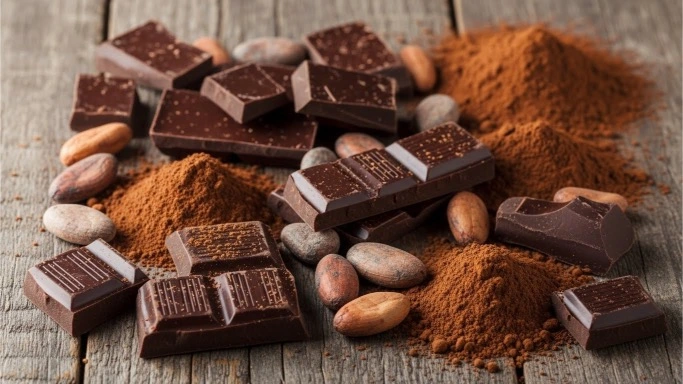
Collagen is the protein that keeps your skin firm, smooth, and youthful. As you age, your body produces less of it, but antioxidants from cocoa can help protect collagen from degradation.
Dark chocolate also provides trace minerals like copper, zinc, and iron, which are essential for healthy collagen synthesis.
When paired with a nutrient-rich diet (think fruits, nuts, and plenty of water), chocolate can actually help you maintain that plump, dewy look.
A report from Nutrients Journal confirmed that polyphenols and minerals in cocoa support collagen and skin elasticity.
Milk Chocolate vs. Dark Chocolate: Which Is Better for Your Skin?
If your goal is glowing skin, dark chocolate wins every time. Milk chocolate, while delicious, contains much less cocoa and often far more sugar and dairy — both of which can promote inflammation.
Look for chocolate that lists at least 70% cocoa on the label. The higher the cocoa percentage, the more antioxidants and the less added sugar.
That doesn’t mean milk chocolate is evil — just treat it as an occasional dessert, not a skincare supplement.
Compare both types in detail in our post Dark vs. Milk Chocolate: The Surprising Health Differences You Need to Know.
How to Add Chocolate to Your Skincare Routine
Beyond eating it, chocolate can also benefit your skin when used topically. Cocoa powder, for instance, is a common ingredient in DIY face masks and scrubs.
Here’s a simple at-home recipe:
Glow-Boosting Chocolate Face Mask
Ingredients:
- 1 tbsp unsweetened cocoa powder
- A tsp honey
- 1 tsp yogurt (or aloe vera gel for sensitive skin)
- A few drops of rose water
Directions:
- Mix all ingredients until smooth.
- Apply evenly to clean skin.
- Leave for 15 minutes, then rinse with warm water.
Cocoa’s antioxidants, honey’s humectants, and yogurt’s lactic acid work together to exfoliate gently and hydrate deeply.
For more DIY chocolate ideas, check out DIY Gourmet Chocs: How to Make Artisan Chocolate at Home.
How Much Chocolate Is “Good” for Skin Health?

You don’t need to eat much to get the benefits — around 20–30 grams (1 oz) of dark chocolate daily is plenty.
Focus on quality, not quantity. Look for chocolates labeled “single-origin” or “organic” and with minimal additives. Pair your daily square with vitamin-rich foods like berries or nuts for an even stronger antioxidant effect.
Harvard Health Publishing notes that moderate dark chocolate intake can promote heart and skin health.
Chocolate’s Skin-Enhancing Nutrients at a Glance
| Nutrient | Skin Benefit | Found In |
| Flavonoids | Protect from UV damage, increase hydration | Dark chocolate |
| Magnesium | Reduces stress, supports cell repair | Cocoa powder |
| Copper & Zinc | Collagen production and elasticity | Cocoa solids |
| Iron | Oxygen delivery to skin cells | Dark chocolate |
| Polyphenols | Fight inflammation and free radicals | Raw cacao |
Myths About Chocolate and Skin — Busted
- “Chocolate causes acne.”
Only high-sugar, processed chocolates are problematic. Pure cocoa may reduce inflammation. - “White chocolate is healthy too.”
Nope — it contains no cocoa solids, meaning zero antioxidants. - “You can replace sunscreen with chocolate.”
Never. Cocoa helps reduce UV damage but does not protect you fully. - “All dark chocolate is the same.”
Quality varies — choose trusted brands with minimal added sugar and dairy.
You can learn more about safe storage and quality in How to Store Chocolate to Keep It Fresh: Tips from Experts.
The bottom line
Chocolate’s power lies in moderation. Too much sugar or low-quality cocoa can cancel out its benefits — but small amounts of high-quality dark chocolate can nourish your body, calm your mind, and enhance your glow from within.
So, next time you indulge in a piece of dark chocolate, don’t feel guilty — think of it as an act of self-care. You’re not just satisfying your cravings; you’re feeding your skin, mood, and spirit.
Discover more chocolate wisdom on ChocoTalks.com — where every bite tells a story.