
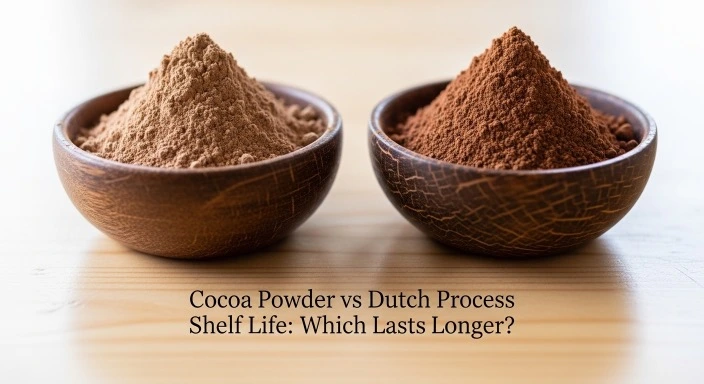
Cocoa Powder vs Dutch Process Shelf Life
If you’ve ever opened your pantry and wondered whether your cocoa powder is still good, you’re not alone. And if you have both natural cocoa powder and Dutch process cocoa sitting on your shelf, the question gets even more specific:
Does natural cocoa powder last longer than Dutch process cocoa?
The short answer: their shelf life is very similar — but how they’re processed does affect how they age, how they lose flavor, and how you should store them.
In this guide, we’ll break down:
- Cocoa powder vs Dutch process shelf life
- What actually causes cocoa powder to spoil
- Whether one type lasts longer
- How storage conditions matter more than processing
- When to replace each type
If you’ve already read our guide on Does Cocoa Powder Go Bad? How to Tell If It’s Still Good, this article goes one step deeper — focusing specifically on the differences between natural and Dutch cocoa over time.
Let’s unpack it clearly.
What’s the Difference Between Natural Cocoa and Dutch Process Cocoa?
Before we compare shelf life, we need to understand what makes them different.
Natural Cocoa Powder
Natural cocoa powder is:
- Made from roasted cocoa beans
- Pressed to remove cocoa butter
- Ground into powder
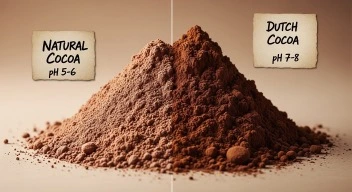
- Left in its natural acidic state (pH around 5–6)
It has:
- A sharp, bright chocolate flavor
- Lighter brown color
- Strong reaction with baking soda
If you want a refresher on cocoa types, see our foundational guide:
What Is Couverture Chocolate and Why Do Chefs Love It? (helps clarify processing differences in chocolate products overall).
Dutch Process Cocoa Powder
Dutch process cocoa is treated with an alkaline solution (often potassium carbonate) to neutralize acidity.
This process:
- Raises pH closer to neutral (around 7–8)
- Darkens the color
- Smooths bitterness
- Produces a deeper, mellower chocolate flavor
It’s often used in:
- Dark cakes
- Brownies
- Cookies
- Chocolate ice cream
Because Dutch cocoa undergoes extra processing, many people assume it either lasts longer — or spoils faster.
Let’s clear that up.
Cocoa Powder vs Dutch Process Shelf Life: The Real Answer
Here’s the truth:
Both natural cocoa powder and Dutch process cocoa have nearly identical shelf lives when stored properly.
Typical shelf life:
- Unopened: 2–3 years
- Opened: 1–2 years (best quality)
- After 2 years: flavor gradually weakens
Neither one “rots” in the traditional sense because cocoa powder is very low in moisture.
But shelf life is not just about safety. It’s about flavor strength and freshness.
Why Cocoa Powder Lasts So Long
Cocoa powder has three key characteristics:
- Very low moisture
- Low fat (most cocoa butter removed)
- Naturally stable structure
According to food safety guidance from the USDA and FDA, dry pantry items with low water activity are resistant to microbial growth when kept dry and sealed.
Cocoa powder doesn’t spoil easily — it deteriorates slowly.
Does Dutch Process Cocoa Last Longer?
This is where things get interesting.
Because Dutch cocoa is alkalized, its pH is higher.
Some people assume that neutralizing acidity makes it more stable. However, shelf stability in cocoa powder is not primarily determined by pH — it’s determined by:
- Exposure to air
- Exposure to moisture
- Exposure to light
- Storage temperature
In practical terms:
Dutch cocoa does not meaningfully outlast natural cocoa.
What can differ is how quickly flavor fades.
How Flavor Degradation Differs Over Time
Here’s the subtle difference:
Natural Cocoa Powder Over Time
- Loses sharpness
- Becomes flatter
- Acidic brightness fades
- Can taste dusty if very old
Dutch Process Cocoa Over Time
- Loses depth
- Dark color may fade slightly
- Becomes less intense
- Can develop mild stale notes
Because Dutch cocoa starts smoother and less acidic, some bakers notice flavor decline more clearly in natural cocoa — but that’s perception, not faster spoilage.
Quick Comparison Table
| Factor | Natural Cocoa Powder | Dutch Process Cocoa |
| Typical Shelf Life | 2–3 years unopened | 2–3 years unopened |
| Best Flavor Window | 12–18 months | 12–18 months |
| Moisture Sensitivity | High | High |
| Light Sensitivity | Moderate | Moderate |
| Spoilage Risk | Very low | Very low |
| Flavor Loss Over Time | Loses brightness | Loses depth |
What Actually Shortens Cocoa Powder Shelf Life?
The real enemies of cocoa powder are:
- Humidity
In very humid kitchens, some bakers add food-safe silica gel packs to the pantry shelf (not inside the cocoa) to help reduce overall moisture around dry ingredients.
- Air exposure
- Heat
- Poor packaging
Not whether it’s natural or Dutch.
If stored in a paper box inside a humid kitchen cabinet, both types degrade faster.
How to Store Natural and Dutch Cocoa Properly
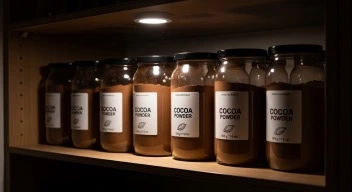
Proper storage matters more than processing type.
Best Storage Conditions
- Cool (60–70°F ideal)
- Dry (low humidity)
- Airtight container
- Away from stove and dishwasher steam
- Out of direct light
If you’ve been keeping cocoa in its original cardboard container, consider transferring it into an airtight glass jar with a sealed lid to protect against humidity.
If you bake often, moving cocoa into an airtight glass jar for cocoa powder helps block moisture and keeps that chocolate aroma stronger for longer.
And if your pantry is humid (or you store flour and sugar nearby), an airtight pantry container set makes it easier to keep cocoa, sugar, and baking staples dry and organized.
Moisture is the biggest factor in reducing shelf life.
Pantry vs Fridge vs Freezer
Should you refrigerate cocoa powder?
No — unless you live in a very humid climate.
Refrigeration can introduce condensation when opened.
Freezing is generally unnecessary.
Pantry storage in an airtight container is best.
If you’re unsure about cocoa storage basics, revisit:
Does Cocoa Powder Go Bad? How to Tell If It’s Still Good for detailed spoilage signs.
Signs Your Cocoa Powder Is Past Its Prime
Both natural and Dutch cocoa show similar aging signs:
- Faded aroma
- Dull color
- Slight clumping (from humidity)
- Flat flavor
- Bitter or stale aftertaste
True mold is extremely rare unless moisture was introduced.
If you see visible mold, discard immediately.
Does Expired Cocoa Powder Make You Sick?
Generally, no.
Cocoa powder doesn’t become dangerous — it becomes weaker.
However:
If it smells sour or musty
If moisture caused visible spoilage
If it tastes off
It’s best to replace it.
Food safety guidelines from the USDA confirm that dry goods past “best by” dates are usually quality issues, not safety hazards.
Shelf Life in Different Brands
Shelf life can vary slightly depending on:
- Fat percentage
- Packaging seal quality
- Processing methods
- Storage before purchase
For example:
If you love a darker, smoother chocolate flavor in cakes and brownies, here are current top-rated options for Dutch-process cocoa powder you can compare.
For classic recipes that use baking soda, browse these popular choices of natural unsweetened cocoa powder and pick one with a strong seal and fresh stock.
For baking projects like Chocolate Swirl Ice Cream or rich cakes, freshness makes a noticeable difference in flavor intensity.
A quick tip that saves money: add the open date using waterproof pantry labels so you always know which cocoa should be used first.
Can You Mix Old Natural and Dutch Cocoa?
Technically yes — but flavor may be muted.
If one is noticeably older, it may dilute the intensity of the fresher one.
For best baking results, use cocoa within 12–18 months of opening.
If you want consistent chocolate flavor (especially when cocoa strength varies by brand), a digital kitchen scale for baking makes it easy to measure cocoa by grams instead of guessing with cups.
Which One Should You Replace First?
If both are stored equally:
Replace whichever smells weaker first.
There is no strong scientific evidence that Dutch or natural cocoa inherently lasts longer.
Storage conditions dominate shelf life differences.
Frequently Asked Questions
Does Dutch process cocoa expire faster?
No. It has a similar shelf life to natural cocoa powder when stored properly.
Can I store cocoa powder in the refrigerator?
Not recommended unless humidity is extreme. Room-temperature pantry storage is better.
Why does my cocoa powder taste bitter?
It may be old, oxidized, or exposed to moisture. Flavor weakens and shifts over time.
How long does cocoa powder last after opening?
Typically 1–2 years for best quality.
Does cocoa powder lose antioxidants over time?
Research suggests polyphenols can degrade slowly, but cocoa remains relatively stable when dry and sealed.

The Takeaway: Cocoa Powder vs Dutch Process Shelf Life
When comparing cocoa powder vs Dutch process shelf life, the difference is minimal.
Both types:
- Last 2–3 years unopened
- Stay best within 12–18 months after opening
- Degrade slowly due to air, moisture, and heat
- Rarely become unsafe — but often lose flavor
Storage matters more than processing.
If you care about bold chocolate flavor in your baking, focus on:
- Airtight storage
- Cool, dry conditions
- Replacing cocoa once aroma fades
Whether you love the brightness of natural cocoa or the deep richness of Dutch process, freshness makes all the difference.
Now I’m curious — which one do you keep in your pantry more often?