
Chocolate feels comforting.
Coffee feels energizing.
So where does chocolate really fall?
If you’ve ever eaten chocolate late at night and wondered why you suddenly felt more awake—or if you’ve avoided it because you’re sensitive to caffeine—you’re not alone. The question “does chocolate have caffeine?” comes up more often than you might think.
The short answer is: yes, chocolate does contain caffeine—but the full truth is more interesting (and more reassuring) than that simple yes or no.
This guide explains how much caffeine is actually in chocolate, why it’s there, how it affects your body, and when it really matters—in clear, everyday language.
Quick Answer: Does Chocolate Have Caffeine?

Yes, chocolate contains caffeine.
But the amount is much lower than coffee or tea.
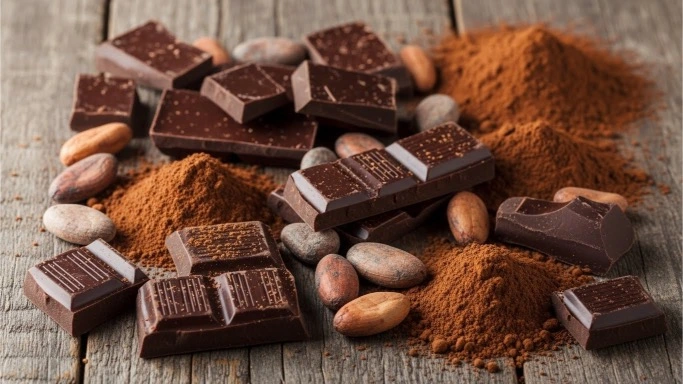
The caffeine in chocolate comes naturally from cacao beans—the same plant used to make cocoa powder and chocolate bars.
For most people, chocolate won’t cause the same jittery or alert feeling as coffee. But depending on the type and amount you eat, it can have a noticeable effect.
Why Chocolate Contains Caffeine in the First Place
Cacao beans naturally contain two stimulating compounds:
- Caffeine
- Theobromine
Both are part of the same chemical family. Both affect your nervous system. But they don’t work the same way.
Caffeine acts quickly and sharply.
Theobromine works more slowly and gently.
This combination is why chocolate feels subtly energizing rather than intense.
If you enjoy learning how cacao behaves differently from coffee beans, ChocoTalk.com has a helpful guide on how cocoa powder is made and what it contains, which adds more context here.
How Much Caffeine Is in Chocolate?
The caffeine content in chocolate depends on how much cacao it contains.
Here’s a simple comparison:
Dark Chocolate
- About 20–30 mg of caffeine per 1 oz (28 g)
- Higher cacao = more caffeine
Milk Chocolate
- About 5–10 mg per 1 oz
- Much lower than dark chocolate
White Chocolate
- 0 mg caffeine
- No cocoa solids, only cocoa butter
Hot Chocolate (Cocoa Powder)
- Around 5 mg per cup
- Varies by recipe and cocoa amount
For comparison:
- Coffee (8 oz): 80–100 mg
- Black tea (8 oz): 40–50 mg
So even dark chocolate has far less caffeine than coffee.
According to data from Harvard T.H. Chan School of Public Health, chocolate’s caffeine content is considered low for most adults.
Dark Chocolate vs Milk Chocolate: Big Difference
This is where many people get confused.
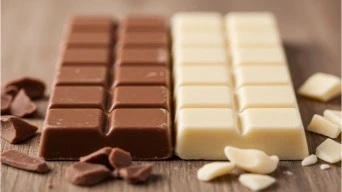
Dark Chocolate
- Higher cacao solids
- More caffeine
- More theobromine
- Stronger flavor
Milk Chocolate
- Lower cacao content
- Much less caffeine
- Sweeter, creamier taste
If you’re sensitive to caffeine, milk chocolate is usually easier to tolerate than dark.
ChocoTalk.com also explains this difference in its dark vs milk chocolate comparison, especially when it comes to flavor and intensity.
What About White Chocolate?
Good news if you love white chocolate.
White chocolate has no caffeine at all.
That’s because it contains:
- Cocoa butter
- Sugar
- Milk solids
But no cocoa solids, which is where caffeine lives.
So if you’re avoiding caffeine completely, white chocolate is safe.
Theobromine: The Other Stimulant in Chocolate
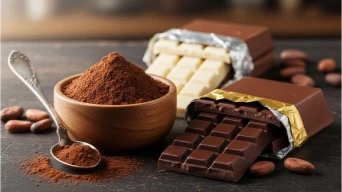
Even when caffeine levels are low, chocolate can still feel stimulating. That’s because of theobromine.
How Theobromine Feels
- Mildly energizing
- Less jittery than caffeine
- Longer-lasting effect
- Can increase heart rate slightly
According to National Institutes of Health, theobromine affects the body more gently than caffeine but can still be noticeable—especially in dark chocolate.
This explains why chocolate sometimes feels calming and uplifting at the same time.
Can Chocolate Keep You Awake at Night?
For most people, small amounts of chocolate won’t affect sleep.
But it depends on:
- The type (dark vs milk)
- The amount
- Your caffeine sensitivity
You might notice effects if:
- You eat large amounts of dark chocolate
- You’re very caffeine-sensitive
- You eat chocolate right before bed
If sleep is a concern, ChocoTalk.com suggests choosing:
- Milk chocolate
- White chocolate
- Or enjoying chocolate earlier in the day
Is Chocolate Safe for Kids?
Yes, in moderation.
Chocolate contains much less caffeine than soda, tea, or coffee. For most children, small amounts are fine.
That said:
- Dark chocolate should be limited
- Chocolate close to bedtime may affect sleep
- Portion size matters
The FDA recommends monitoring total caffeine intake from all sources, even when it’s low.
Chocolate vs Coffee: Why They Feel So Different

This is a common question.
Coffee
- High caffeine
- Fast-acting
- Can cause jitters
Chocolate
- Low caffeine
- Contains theobromine
- Slower, gentler effect
That’s why chocolate feels more like a mood lift than a wake-up jolt.
Does Cocoa Powder Have More Caffeine Than Chocolate Bars?
Cocoa powder is made from cocoa solids, so it does contain caffeine—but still in small amounts.
- 1 tablespoon cocoa powder: ~6 mg caffeine
- Used across an entire recipe, not per serving
hot chocolate with cocoa powder guide explains how cocoa behaves in drinks versus baked goods.
Who Should Be Careful With Chocolate?
Most people can enjoy chocolate without concern. But you may want to be mindful if you:
- Are extremely caffeine-sensitive
- Have heart rhythm conditions
- Are advised to limit stimulants
- Experience anxiety triggered by caffeine
In those cases, stick to:
- Milk chocolate
- White chocolate
- Smaller portions
According to Mayo Clinic, sensitivity varies widely from person to person.
Short FAQ: Chocolate and Caffeine
Does all chocolate contain caffeine?
No. White chocolate contains none.
Is dark chocolate stronger than coffee?
No. Coffee has far more caffeine.
Can chocolate cause jitters?
Start with
Is chocolate okay before bed?
For most people, yes—especially milk or white chocolate.
Final Thoughts
So, does chocolate have caffeine?
Yes—but not enough to fear for most people.
Chocolate’s gentle stimulation comes from a mix of small caffeine amounts and theobromine, creating a mild, balanced effect that feels very different from coffee.
Understanding this lets you enjoy chocolate with confidence—whether it’s a square after dinner, a cup of hot cocoa, or a rich chocolate dessert. And if you love learning the why behind chocolate—how it works, how it affects the body, and how to enjoy it better—you’ll find plenty more thoughtful guides waiting for you on ChocoTalk.com, where every bite truly tells a story.