
Chocolate is one of those foods people feel torn about.
On one hand, it’s comforting, nostalgic, and genuinely enjoyable.
On the other, it often comes with questions about sugar, calories, and health.
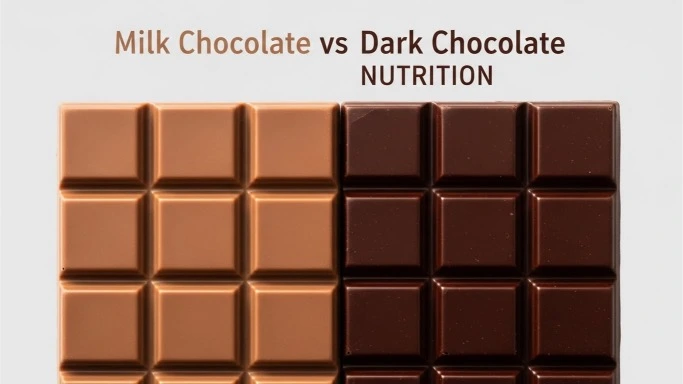
That’s where the big debate comes in: milk chocolate vs dark chocolate nutrition.
Is dark chocolate really healthier?
Is milk chocolate “bad,” or just misunderstood?
And which one actually fits better into a balanced lifestyle?
Let’s break it all down—clearly, honestly, and without guilt.
The Real Difference Between Milk Chocolate and Dark Chocolate

At a glance, milk chocolate and dark chocolate look similar. But nutritionally, they’re quite different.
The key difference comes down to cocoa content.
Milk Chocolate
- Lower cocoa percentage
- Contains milk solids
- Sweeter taste
- Creamier texture
Dark Chocolate
- Higher cocoa percentage
- Little to no milk
- Less sugar (usually)
- More intense chocolate flavor
The higher the cocoa content, the more nutrients you get from the cacao bean itself.
If you want a deeper look at how cocoa affects chocolate structure, ChocoTalks.com has a helpful guide on how cocoa powder is made and what it contains.
Cocoa Content: Why It Matters for Nutrition

Cocoa is where most of chocolate’s nutritional value lives.
Cocoa provides:
- Antioxidants (flavanols)
- Iron
- Magnesium
- Fiber
Dark chocolate typically contains 50–85% cocoa, while milk chocolate often falls between 10–35% cocoa.
That difference changes everything—from antioxidants to sugar levels.
According to Harvard T.H. Chan School of Public Health, cocoa flavanols are responsible for many of chocolate’s potential health benefits.
Calories: Milk Chocolate vs Dark Chocolate
Let’s get this out of the way.
Calorie-wise, milk chocolate and dark chocolate are surprisingly similar.
Per 1 oz (28 g) serving:
- Milk chocolate: ~150–160 calories
- Dark chocolate (70%): ~160–170 calories
So calories alone aren’t the deciding factor.
What matters more is where those calories come from—sugar vs cocoa.
Sugar Content: Where Milk Chocolate Falls Behind
This is one of the biggest nutritional differences.
Milk Chocolate
- Higher added sugar
- Often 12–20g sugar per ounce
Dark Chocolate
- Lower sugar (depending on percentage)
- Around 5–8g sugar per ounce at 70%
If you’re watching sugar intake, dark chocolate usually has the edge.
The American Heart Association recommends limiting added sugars, which is why dark chocolate is often favored in nutrition discussions.
Fat Content: Not All Fat Is the Enemy
Both milk and dark chocolate contain fat—mostly from cocoa butter.
Cocoa butter is rich in:
- Stearic acid
- Oleic acid
These fats behave differently from other saturated fats.
According to Cleveland Clinic, stearic acid does not appear to raise LDL (“bad”) cholesterol the same way other saturated fats do.
So while chocolate is still a treat, its fat profile isn’t as alarming as many people assume.
Antioxidants: Dark Chocolate’s Biggest Advantage
This is where dark chocolate clearly wins.
Dark chocolate contains significantly more:
- Flavanols
- Polyphenols
- Antioxidant compounds
Milk chocolate still has antioxidants—but milk proteins may reduce their absorption.
This is one reason nutrition experts often highlight dark chocolate in moderation as the “better” choice.
ChocoTalks.com explores this in more detail in its article on dark chocolate antioxidants explained simply.
Vitamins and Minerals Comparison
Dark Chocolate (70%+)
- Iron
- Magnesium
- Zinc
- Copper
Milk Chocolate
- Calcium (from milk)
- Some potassium
Milk chocolate’s calcium content can be helpful, but it doesn’t outweigh the broader mineral profile found in dark chocolate.
Caffeine and Theobromine Differences
Both types contain small amounts of caffeine—but dark chocolate has more.
Per ounce:
- Milk chocolate: ~5–10 mg caffeine
- Dark chocolate: ~20–30 mg caffeine
Dark chocolate also contains more theobromine, a mild stimulant.
If caffeine sensitivity matters to you, ChocoTalks.com’s guide on does chocolate have caffeine is worth a read.
Is Milk Chocolate Unhealthy?
This is where nuance matters.
Milk chocolate is not “bad.”
It’s simply more of a treat than a functional food.
Milk chocolate:
- Tastes sweeter and creamier
- Is often more enjoyable for casual eating
- Can fit into a balanced diet in moderation
The issue comes from portion size and frequency, not the chocolate itself.
According to Mayo Clinic, enjoying sweets mindfully is more important than eliminating them entirely.
Which Chocolate Is Better for Weight Management?
Neither chocolate is a weight-loss food.
But if you’re choosing between the two:
- Dark chocolate may promote satiety
- Stronger flavor can reduce overeating
- Lower sugar helps manage cravings
Milk chocolate, being sweeter and creamier, can be easier to overeat.
Taste Matters More Than You Think
Here’s an honest truth:
The “healthiest” chocolate is the one you can enjoy without overindulging.
If you dislike dark chocolate but force yourself to eat it, you may end up eating more sweets later.
Enjoyment matters. Satisfaction matters.
Remember that chocolate is both food and experience—not just a nutrition label.
How to Choose the Best Option for You
Choose dark chocolate if you:
- Want lower sugar
- Enjoy bold flavors
- Care about antioxidants
Choose milk chocolate if you:
- Prefer creaminess
- Eat chocolate occasionally
- Want comfort over intensity
There’s room for both.
Smart Portion Tips (For Any Chocolate)

- Stick to 1 oz portions
- Eat slowly
- Pair with fruit or nuts
- Avoid mindless snacking
The FDA emphasizes portion awareness over strict food avoidance.
Short FAQ: Milk Chocolate vs Dark Chocolate Nutrition
Is dark chocolate always healthier?
Nutritionally, yes—but enjoyment still matters.
Can milk chocolate be part of a healthy diet?
Absolutely, in moderation.
Does milk chocolate have antioxidants?
Yes, just fewer than dark chocolate.
Which is better for kids?
Milk chocolate is usually more appropriate due to lower caffeine.
Final Thoughts: It’s Not About “Good” or “Bad”
The debate around milk chocolate vs dark chocolate nutrition often misses the bigger picture.
Dark chocolate offers more nutritional benefits.
Milk chocolate offers more comfort and accessibility.
Neither one is the enemy.
When enjoyed thoughtfully, both can absolutely belong in a balanced lifestyle. Chocolate isn’t just fuel—it’s culture, memory, and joy.
And if you enjoy learning how chocolate fits into real life—not just perfect diets—you’ll find plenty more honest, chocolate-loving guides on ChocoTalks.com, where every bite truly tells a story.