
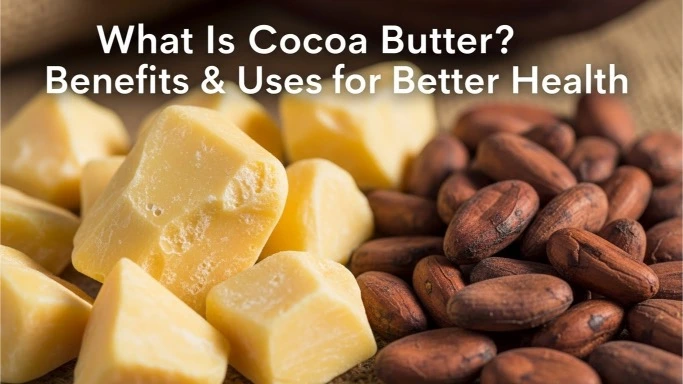
Cocoa butter sounds fancy, but chances are you’ve already used it—maybe without even realizing it.
It’s in chocolate.
It’s in skincare.
It’s in lip balms, lotions, and even some medicines.
But what is cocoa butter, really? And is it actually good for you, or just another trendy ingredient with a nice name?
This guide breaks it all down in plain language. You’ll learn what cocoa butter is, how it’s made, its real benefits, its limitations, and how people use it for both food and health—without hype or confusion.
What Is Cocoa Butter?
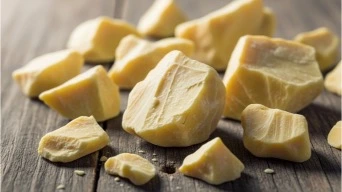
Cocoa butter is a natural fat extracted from cocoa beans.
When cocoa beans are processed to make chocolate, they’re ground into a thick paste called chocolate liquor. That paste is then pressed, separating it into two parts:
- Cocoa solids (used for cocoa powder)
- Cocoa butter (the fat portion)
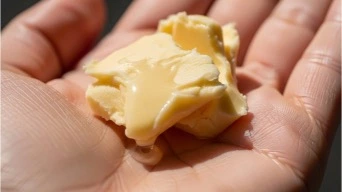
Cocoa butter is solid at room temperature but melts just below body temperature. That’s why chocolate melts so smoothly in your mouth—and why cocoa butter feels luxurious on skin.
Where Cocoa Butter Comes From (In Simple Terms)
The cocoa bean contains about 50–55% fat. That fat is cocoa butter.
The basic process looks like this:
- Cocoa beans are fermented and roasted
- Beans are ground into chocolate liquor
- Liquor is pressed under high pressure
- Cocoa butter is separated and purified
This same process is why cocoa butter shows up in both chocolate bars and skincare products.
If you’re curious how this fits into chocolate nutrition overall, “Milk Chocolate vs Dark Chocolate Nutrition” explains how cocoa butter affects texture and fat content.
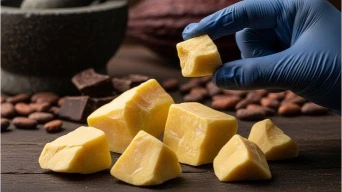
What Does Cocoa Butter Taste Like?
Pure cocoa butter has:
- A mild cocoa aroma
- Very little sweetness
- No bitterness
It doesn’t taste like chocolate on its own. Instead, it acts as a flavor carrier, helping other ingredients shine.
That’s one reason chocolate made with real cocoa butter tastes smoother and cleaner than chocolate made with vegetable fats.
Cocoa Butter vs Other Fats in Chocolate
Not all fats behave the same way.
Cocoa Butter
- Melts at body temperature
- Smooth mouthfeel
- Stable and shelf-friendly
Vegetable Oils or Palm Oil
- Cheaper
- Waxy texture
- Less pleasant melt
High-quality chocolate almost always uses cocoa butter instead of substitutes.
Is Cocoa Butter Healthy?
This is where things get interesting.
Cocoa butter is high in fat—but not all fat is equal.
It contains:
- Stearic acid
- Oleic acid
- Palmitic acid
Stearic acid behaves differently from other saturated fats.
According to Cleveland Clinic, stearic acid does not appear to raise LDL (“bad”) cholesterol the same way other saturated fats do.
That doesn’t make cocoa butter a health food—but it does explain why chocolate fat isn’t automatically as harmful as people assume.
Cocoa Butter and Heart Health
Cocoa butter contains a mix of fats:
- About 60% saturated
- About 40% unsaturated
The unsaturated portion (especially oleic acid) is the same fat found in olive oil.
The Harvard Health Publishing notes that overall dietary patterns matter more than individual fats. Cocoa butter can fit into a balanced diet when consumed in moderation.
Cocoa Butter and Weight Gain: What to Know
Cocoa butter is calorie-dense.
- 1 tablespoon = ~120 calories
- Almost entirely fat
That means:
- Small amounts go a long way
- It’s easy to overconsume when paired with sugar
This is why chocolate can quietly become calorie-heavy—not because of cocoa butter alone, but because of the sugar + fat combination.
If sugar intake is a concern for you, our article How Much Sugar in Chocolate? helps explain how these two work together.
Cocoa Butter for Skin: Why It’s So Popular
Outside of food, cocoa butter is famous for skincare.
Why People Love Cocoa Butter for Skin
- Deeply moisturizing
- Forms a protective barrier
- Softens rough or dry skin
- Pleasant natural scent
It’s commonly used for:
- Dry skin
- Stretch mark care
- Lip balms
- Body lotions
According to the American Academy of Dermatology, cocoa butter is effective as an occlusive moisturizer—meaning it helps lock moisture into the skin.
Does Cocoa Butter Help with Stretch Marks?
This is one of the most common questions.
The honest answer:
- Cocoa butter helps keep skin moisturized
- It does not prevent stretch marks entirely
Stretch marks are influenced by genetics, skin elasticity, and rapid stretching—not just dryness.
Still, well-moisturized skin tends to feel more comfortable and supple.
Cocoa Butter in Hair Care
Cocoa butter also appears in:
- Hair masks
- Scalp treatments
- Anti-frizz products
It works best for:
- Thick or curly hair
- Dry or damaged hair
It can be too heavy for fine hair if overused.
Cocoa Butter in Medicine and Supplements
Cocoa butter is used as:
- A base for suppositories
- A carrier for topical medications
Why? Because it melts at body temperature and is gentle on tissue.
The FDA recognizes cocoa butter as safe for use in foods, cosmetics, and pharmaceuticals.
Cocoa Butter vs Coconut Oil vs Shea Butter
People often compare these.
Cocoa Butter
- Firm, protective
- Long-lasting moisture
- Chocolate aroma
Coconut Oil
- Antimicrobial
- Lighter texture
- Can clog pores for some
Shea Butter
- Softer texture
- High in vitamins
- Less scent
Each has its place. Cocoa butter excels at sealing moisture, not penetrating deeply.
Does Cocoa Butter Contain Caffeine?
No.
Cocoa butter contains no caffeine and no theobromine.
Those compounds live in cocoa solids, not the fat.
If caffeine sensitivity is something you think about, article Does Chocolate Have Caffeine? explains where caffeine actually comes from in chocolate.
Is Cocoa Butter Vegan?
Yes—pure cocoa butter is plant-based.
However, always check labels:
- Some products blend cocoa butter with milk-derived ingredients
In food and cosmetics, cocoa butter itself is vegan-friendly.
Potential Downsides of Cocoa Butter
Cocoa butter isn’t perfect.
Possible drawbacks:
- High calorie content
- Can clog pores for acne-prone skin
- Easy to overuse in food
Moderation matters.
If you’re interested in a balanced perspective, Reasons Why Chocolate Is Bad for You on ChocoTalks.com discusses how fat and sugar together can become an issue.
How to Use Cocoa Butter Wisely
In Food
- Enjoy chocolate with real cocoa butter
- Stick to reasonable portions
- Balance with fiber-rich foods
On Skin
- Apply to damp skin for better absorption
- Use sparingly if acne-prone
In DIY Uses
- Lip balms
- Body butters
- Massage bars
Short FAQ: Cocoa Butter
Is cocoa butter the same as chocolate?
No. It’s only the fat portion.
Is cocoa butter good for cholesterol?
It doesn’t raise LDL as much as other saturated fats.
Can you eat cocoa butter?
Yes, it’s edible and used in chocolate.
Does cocoa butter expire?
Yes, but it has a long shelf life if stored cool and dry.
Final Thoughts
So, what is cocoa butter?
It’s a natural cocoa-derived fat with real benefits—especially for texture, skin protection, and chocolate quality. It’s not a miracle ingredient, and it’s not something to fear either.
Used thoughtfully, cocoa butter can be part of:
- A balanced diet
- A solid skincare routine
- High-quality chocolate you actually enjoy
If you like learning how chocolate ingredients really work—without myths or extremes—you’ll find plenty more honest, practical guides waiting for you on ChocoTalks.com, where chocolate is explored with clarity and curiosity.